Discover the 300-Year-Old Flower Thriving in the Arctic
Discover the 300-Year-Old Flower Thriving in the Arctic
The cushion plant, scientifically known as Silene acaulis, is one of the most remarkable survivors on Earth. This small but resilient flowering plant can live for up to 300 years in the unforgiving conditions of the Arctic—and still burst into vibrant bloom.
For nearly six months each year, the Svalbard archipelago remains in complete darkness due to the Earth’s tilt. During this long polar night, the frozen landscape lies silent under an endless sky. But when spring finally arrives, sunlight floods back across the islands. By midsummer, the sun barely dips below the horizon, lingering in a surreal, glowing loop around the sky.
This extreme seasonal shift makes survival incredibly difficult. Yet Silene acaulis has evolved a brilliant strategy to endure it all.
A Natural Design Built for Survival
According to Norwegian botanist Pernille Bronken Eidesen, who has spent years studying Arctic alpine plants, the cushion plant’s unique shape is key to its survival.
Rather than growing tall, it forms dense, dome-shaped clusters—almost like natural cushions pressed tightly against the ground. This compact structure helps shield the plant from harsh winds, freezing temperatures, and nutrient-poor soil.
“These plants grow in thick cushions to retain heat,” Eidesen explains.
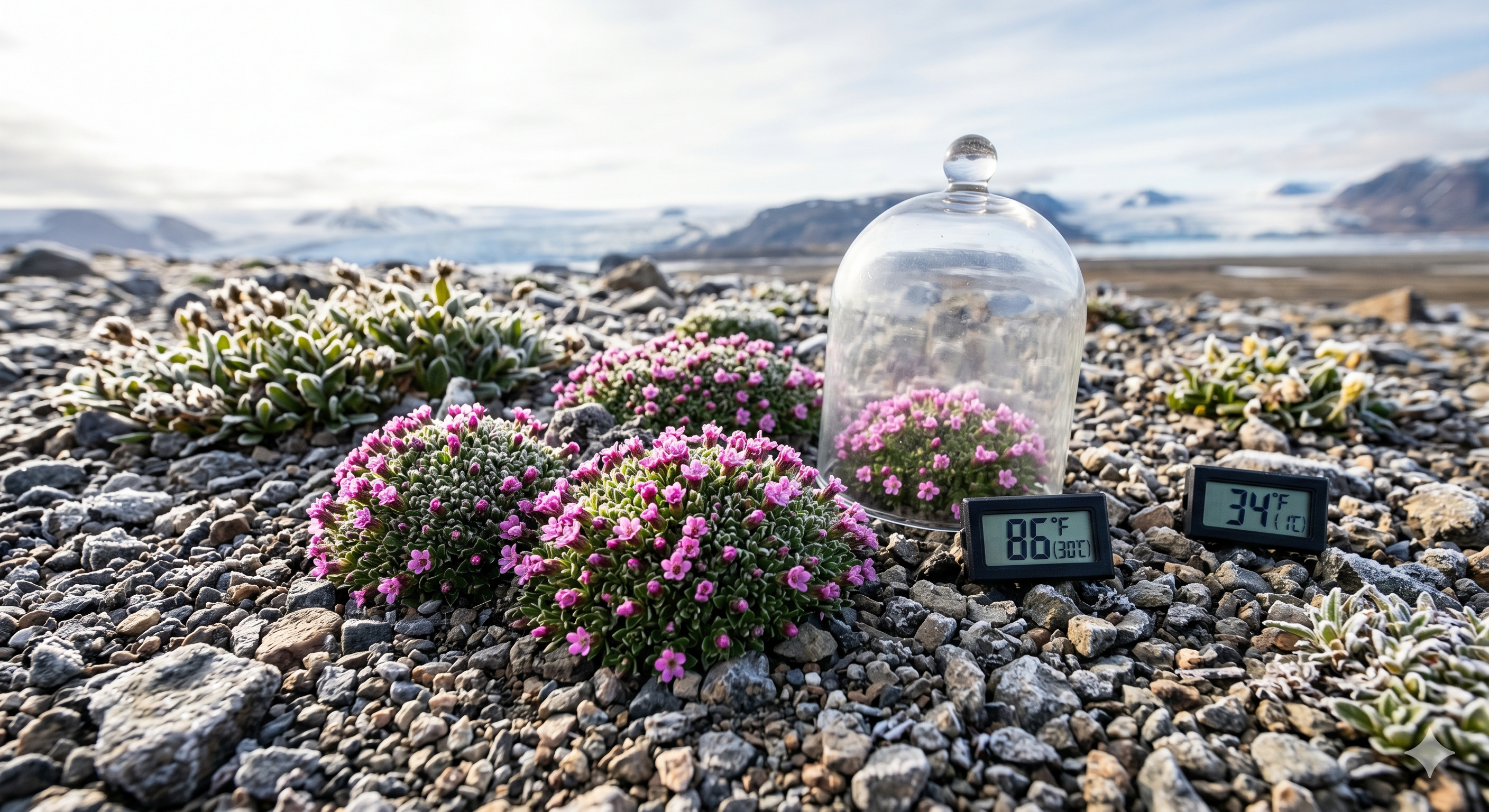
On sunny days, even when the surrounding air hovers just above freezing, temperatures inside the plant’s cushion can reach up to 86°F (30°C). That internal warmth creates a tiny microclimate—essentially a self-made greenhouse.
Blooming Against the Odds
In the Arctic, pollinators are scarce, so timing is everything. The cushion plant cleverly extends its blooming period to improve its chances of reproduction.
As the sun moves across the horizon, different parts of the plant receive varying amounts of heat. The south-facing side warms up more quickly than the north-facing side. As a result, flowers bloom gradually—from one side to the other.
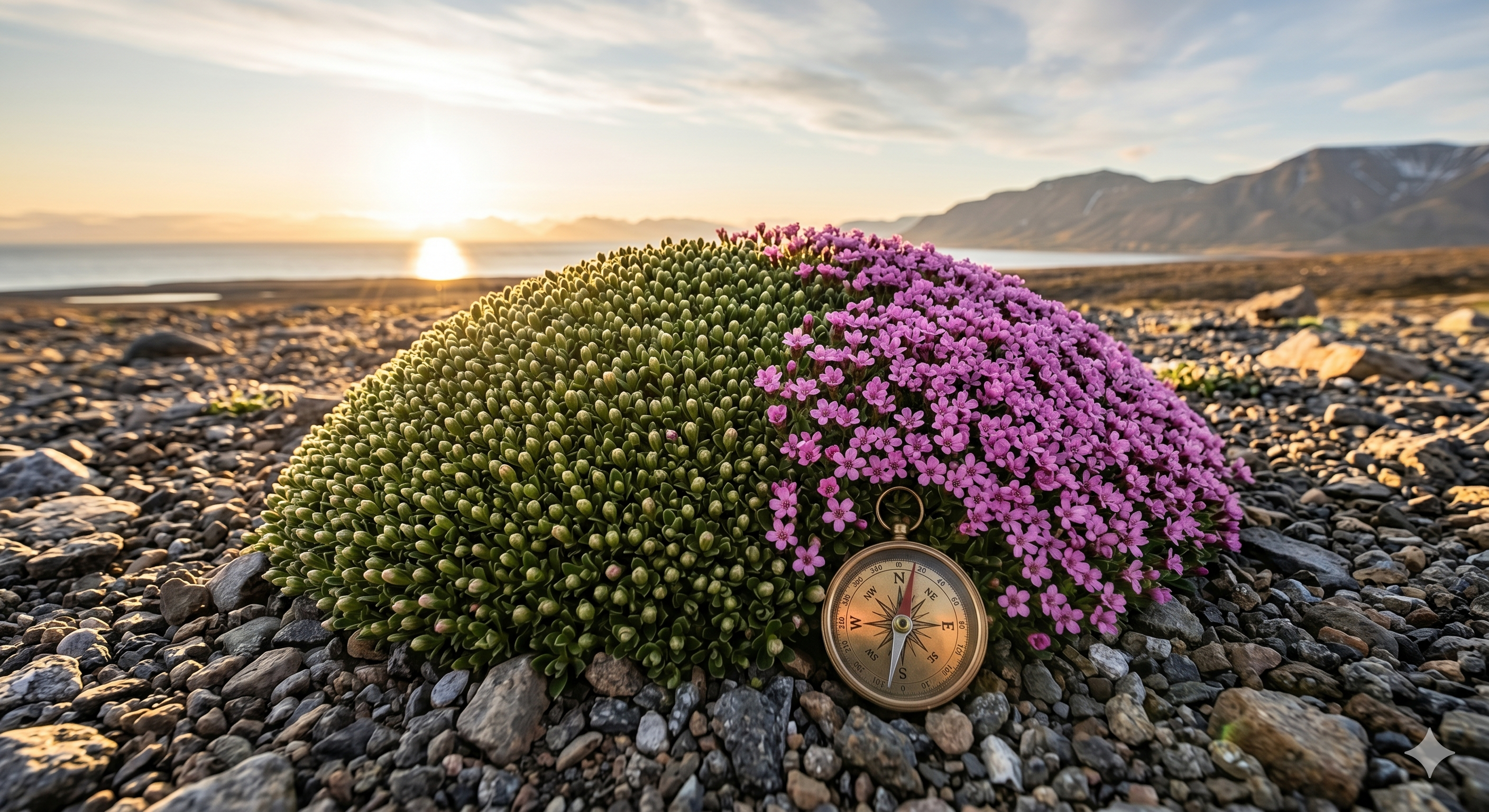
While each individual flower lasts only about a week, the entire plant can remain in bloom for over a month.
This directional blooming pattern didn’t go unnoticed. Early explorers reportedly used these plants as natural compasses—hence the nickname “compass plant.”
Recycling for Survival
The plant’s dome shape also helps solve another major challenge: the lack of nutrients in Arctic soil.
Dead leaves get trapped within the cushion, slowly decomposing and enriching the soil beneath. It’s a built-in recycling system that allows the plant to sustain itself in an otherwise barren environment.
A Life Measured in Centuries
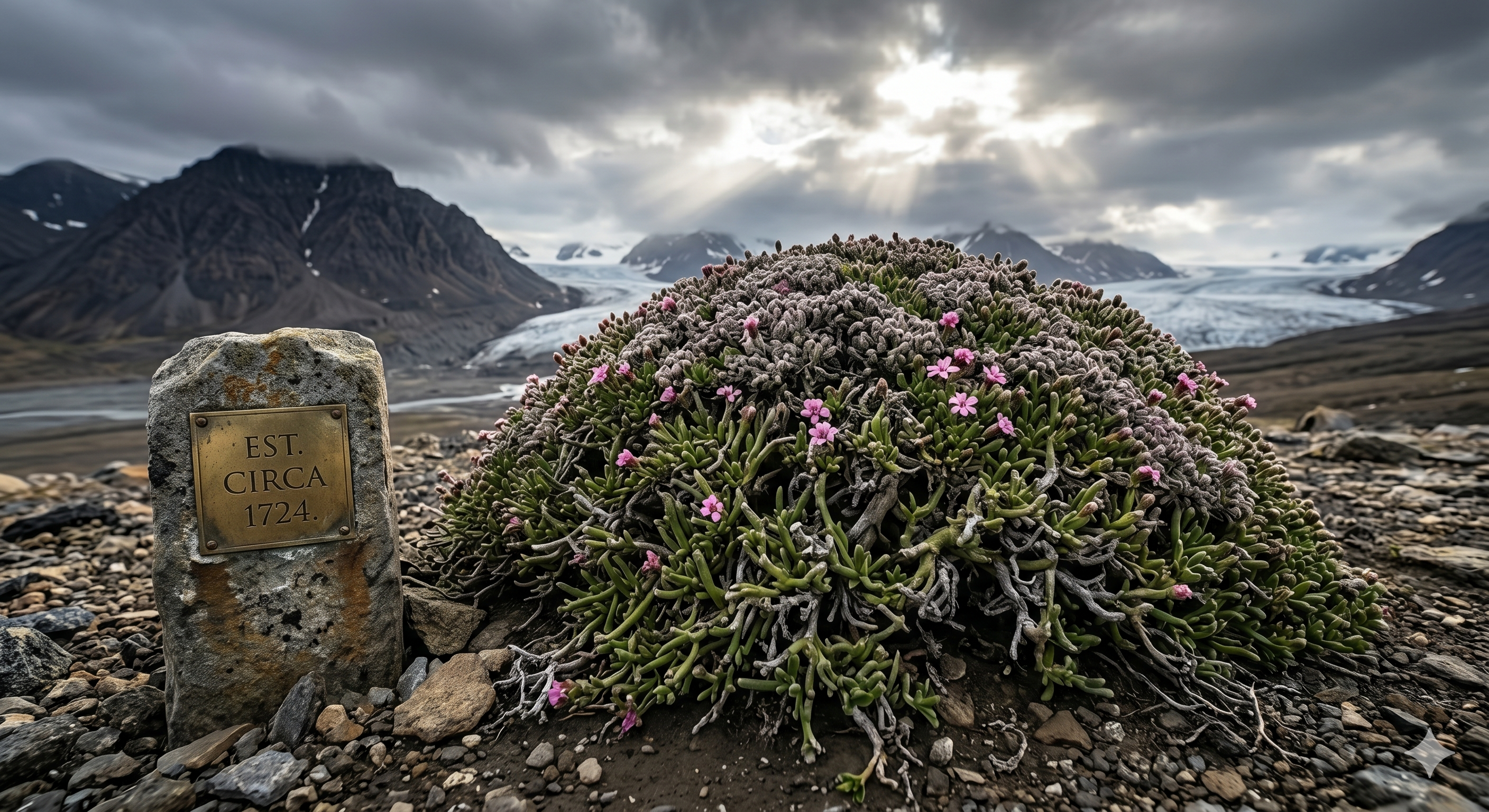
Long lifespans are common among Arctic plants due to the short and unpredictable growing seasons. But Silene acaulis takes this to another level—living up to 300 years.
Some of the plants growing in Svalbard today were already alive when King George II ruled Britain in the early 18th century.
Interestingly, the plant doesn’t need to reproduce often. Over its entire lifetime, producing just one viable seed is enough to ensure its legacy continues.
When the flowers fade, the warmth trapped inside the cushion protects developing seeds. But once released, those seeds face the brutal Arctic winds—and survival becomes a matter of chance.
The Power of Persistence
In a world where it can take centuries to produce the next generation, the cushion plant teaches a powerful lesson: survival isn’t about speed—it’s about resilience.
Quietly, patiently, and against all odds, Silene acaulis endures—proving that even in the harshest environments on Earth, life finds a way.