The Unsolved Mystery of Puma Punku: Who Built These “Laser-Cut” Megastructures?
The Unsolved Mystery of Puma Punku: Who Built These “Laser-Cut” Megastructures?
Ever since the discovery of Puma Punku, researchers have been working tirelessly to unravel its secrets. Yet, despite decades of study, this ancient site continues to challenge our understanding of early civilizations.
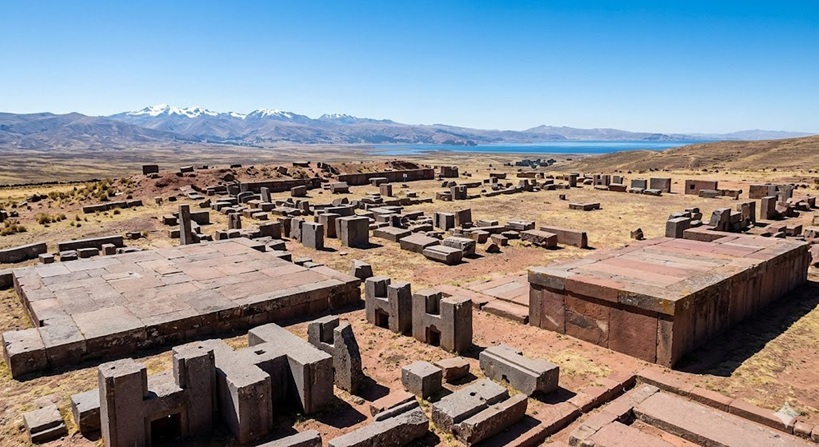
High in the Andes Mountains of Bolivia, near the ancient city of Tiwanaku, lies one of the most puzzling archaeological sites on Earth. Massive stone structures—some weighing over 100 tons—are cut and assembled with a precision that seems almost modern.
A Civilization Ahead of Its Time?
Puma Punku is part of the broader Tiwanaku complex, a once-thriving cultural and religious center. Among its most impressive structures are the Akapana pyramid and the Puma Punku platform itself. These constructions showcase remarkable engineering—but how they were built remains a topic of debate.
Across the world, ancient civilizations have left behind incredible monuments, from the pyramids of Egypt to Stonehenge and the statues of Easter Island. Yet Puma Punku often stands out as even more mysterious.
Stones That Seem Impossible to Shape
The site sits at an altitude of nearly 3,800 meters (12,500 feet), in a remote and harsh environment. What truly sets Puma Punku apart are its stones—particularly blocks made of andesite, a volcanic rock with a hardness of about 7 on the Mohs scale.
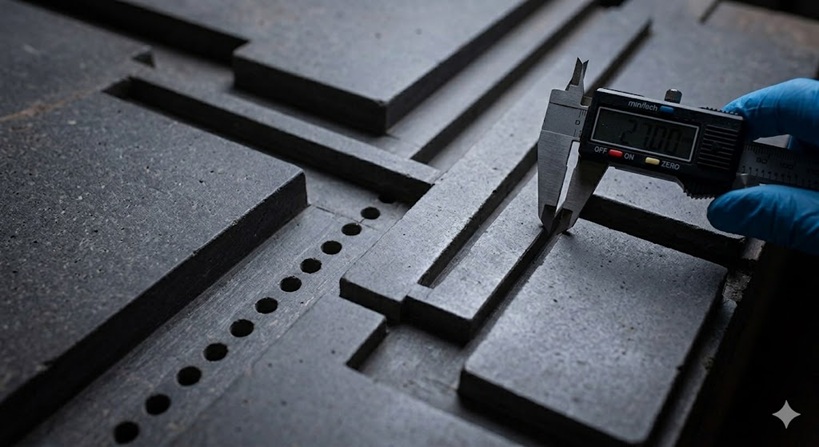
Even with modern tools, cutting and shaping andesite is extremely difficult. Yet here, the stones are carved with astonishing precision. Some feature perfectly straight edges, sharp right angles, and smooth surfaces. Others include drilled holes as small as 5 millimeters in diameter—arranged in exact patterns.
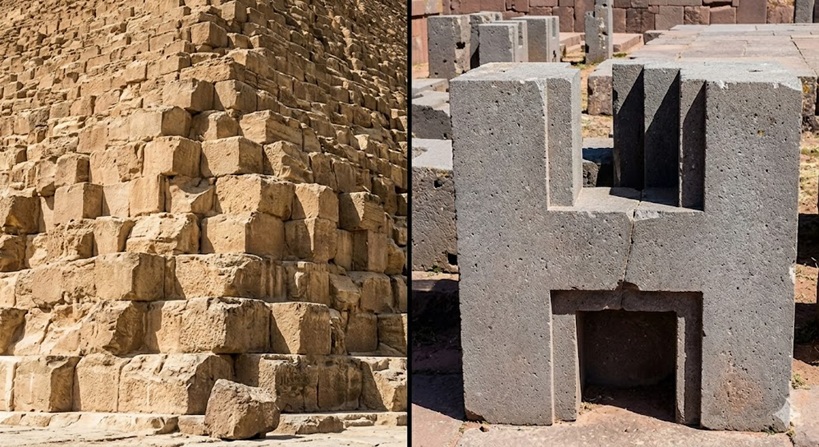
Looking closely, many of these blocks resemble machine-made components, almost as if they were cut using advanced tools—or even lasers.
How Were These Massive Stones Moved?
The largest stones at Puma Punku weigh more than 130 tons. Archaeologists believe the red sandstone used at the site was transported from quarries near Lake Titicaca, about 10 kilometers away, while smaller andesite blocks may have come from as far as 90 kilometers.
The prevailing theory is that ancient builders used logs, ropes, ramps, and sheer human labor—possibly aided by llamas or alpacas—to move these stones. Still, transporting such massive materials across rugged terrain at high altitude remains an extraordinary feat.
Precision Engineering Without Modern Technology
Another fascinating detail is how the stones were joined together. Instead of mortar, the builders used metal clamps—crafted from a sophisticated alloy of copper, arsenic, nickel, and bronze.
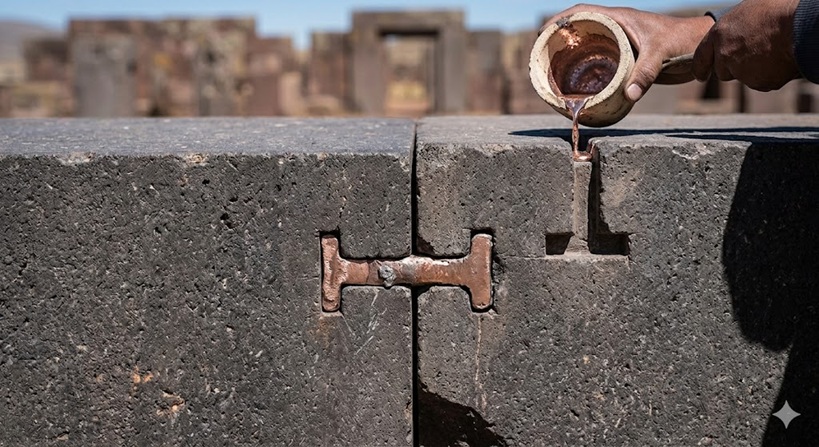
This suggests that the people of Tiwanaku were not only skilled stoneworkers but also advanced metallurgists.
A Radical Theory: Artificial Stone?
In 2018, French materials scientist Joseph Davidovits proposed a controversial idea: what if some of the stones weren’t carved at all—but cast?
His research suggested that certain samples contained organic materials and compounds not typically found in natural stone. According to this theory, ancient builders may have created a form of “geopolymer concrete,” pouring it into molds to achieve such precise shapes.
If true, this would eliminate the need to transport massive stones or carve intricate details. However, this hypothesis remains debated, as recreated samples have not fully matched the complexity seen at Puma Punku.
Legends and Speculation
Local legends tell of giants who built Puma Punku over 17,000 years ago using supernatural strength and magic—making stones float into place.
While such stories are fascinating, scientific dating methods—particularly radiocarbon analysis—indicate that the site was constructed around 1,500 years ago, during the height of the Tiwanaku civilization.
Still, some researchers argue that Puma Punku could be older than currently believed. Others go even further, suggesting extraterrestrial involvement—though there is no scientific evidence supporting this claim.
A Mystery That Endures
Despite extensive research, many questions remain unanswered:
How did ancient builders achieve such precision?
What tools and techniques did they use?
How were the massive stones transported and assembled?
Most archaeologists agree that Puma Punku was part of the Tiwanaku civilization and likely served a ceremonial or astronomical purpose. But without written records, much of its story is lost to time.
What remains is a site that continues to inspire curiosity and debate—a powerful reminder that human history still holds many secrets waiting to be uncovered.