7 Smart Tips for Using Cooking Oils in a Healthy Way
7 Smart Tips for Using Cooking Oils in a Healthy Way
According to the National Institute of Nutrition Vietnam, every household should keep at least two types of cooking oil on hand to support both flavor and health.
1. Keep Two Types of Oil in Your Kitchen
Nutrition experts recommend having:
One oil for low-heat uses like sautéing, salad dressings, soups, and marinades
Another oil for high-heat cooking like frying
Oils such as sunflower, soybean, canola, and olive oil are great for lighter cooking or raw use. For frying, blended cooking oils are often better because they can handle higher temperatures.
2. Don’t Overheat Your Oil
Heating oil beyond its smoke point can destroy nutrients and create harmful compounds. When oil starts smoking, it’s breaking down and releasing toxins.
A better approach: heat your pan first, then add oil, and immediately add your ingredients. This helps avoid overheating the oil.
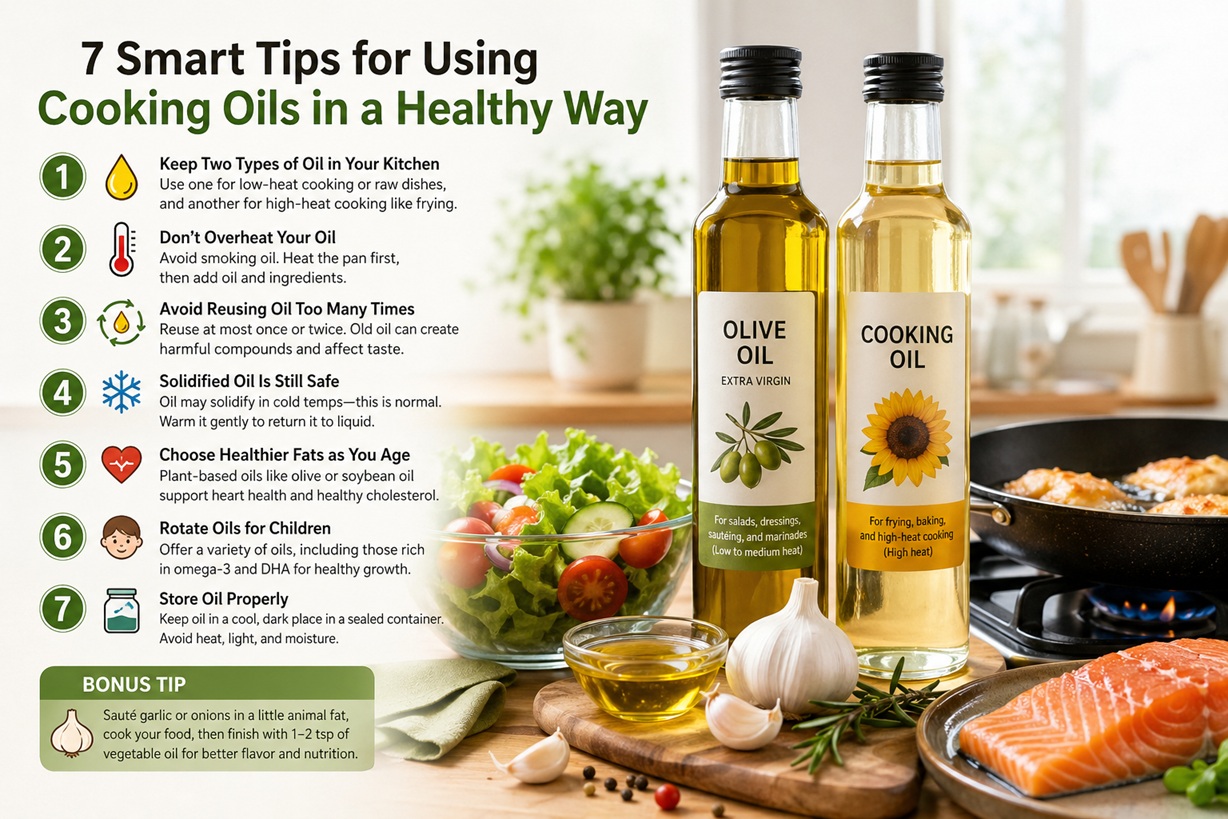
3. Avoid Reusing Oil Too Many Times
Reusing cooking oil repeatedly can lead to the formation of trans fats and other harmful substances. Ideally, oil should not be reused—or at most, used once or twice.
Old oil also affects taste and appearance, making food darker, heavier, and less appetizing.
4. Solidified Oil Is Still Safe
If your oil turns cloudy or solid in cooler temperatures, don’t worry—it’s a natural physical reaction, not spoilage.
To fix it, simply place the bottle in warm water and it will return to liquid form without losing quality.
5. Choose Healthier Fats as You Age
As people get older, reducing animal fats becomes more important due to cholesterol concerns.
Plant-based oils like olive oil and soybean oil are rich in omega-3, 6, and 9 fatty acids, which can help support heart health and manage cholesterol levels.
6. Rotate Oils for Children
Children need a higher fat intake for growth—up to 40% of daily calories in early years.
It’s best to provide a mix of fats from both plant and animal sources, especially those rich in DHA and omega-3 (like fish oil). Rotating different oils helps ensure a balanced intake of nutrients.
7. Store Oil Properly
To keep oil fresh:
Store it in a cool, dark place
Keep it tightly sealed
Use glass or ceramic containers instead of metal
Exposure to heat, light, air, or moisture can cause oil to spoil faster.
Bonus Tip: Cook Smarter for Better Flavor
For better taste and nutrition, try this method:
Start by sautéing garlic or onions in a small amount of animal fat
Add your main ingredients and cook thoroughly
Finish with 1–2 teaspoons of vegetable oil before removing from heat
This technique enhances flavor while preserving the nutritional value of the oil.