Can High Blood Pressure Go Away on Its Own? A New Study in The Lancet Is Challenging Long-Held Beliefs
Can High Blood Pressure Go Away on Its Own? A New Study in The Lancet Is Challenging Long-Held Beliefs
High blood pressure—also known as Hypertension—has long been considered a lifelong condition requiring ongoing medication. But a new study published in the respected medical journal The Lancet is raising eyebrows by suggesting that, for some people, that may not always be the case.
Often referred to as the “silent killer,” hypertension typically develops without noticeable symptoms but significantly increases the risk of heart disease, stroke, and premature death. For decades, standard medical guidance has emphasized long-term drug therapy to manage the condition.
However, researchers from The Chinese University of Hong Kong have uncovered findings that challenge this traditional view.
The study analyzed data from 2,760 adults between the ages of 33 and 99 who had high blood pressure but had never taken medication for it. Participants were drawn from two large-scale longitudinal studies: the Health and Retirement Study (HRS) and the English Longitudinal Study of Ageing (ELSA).
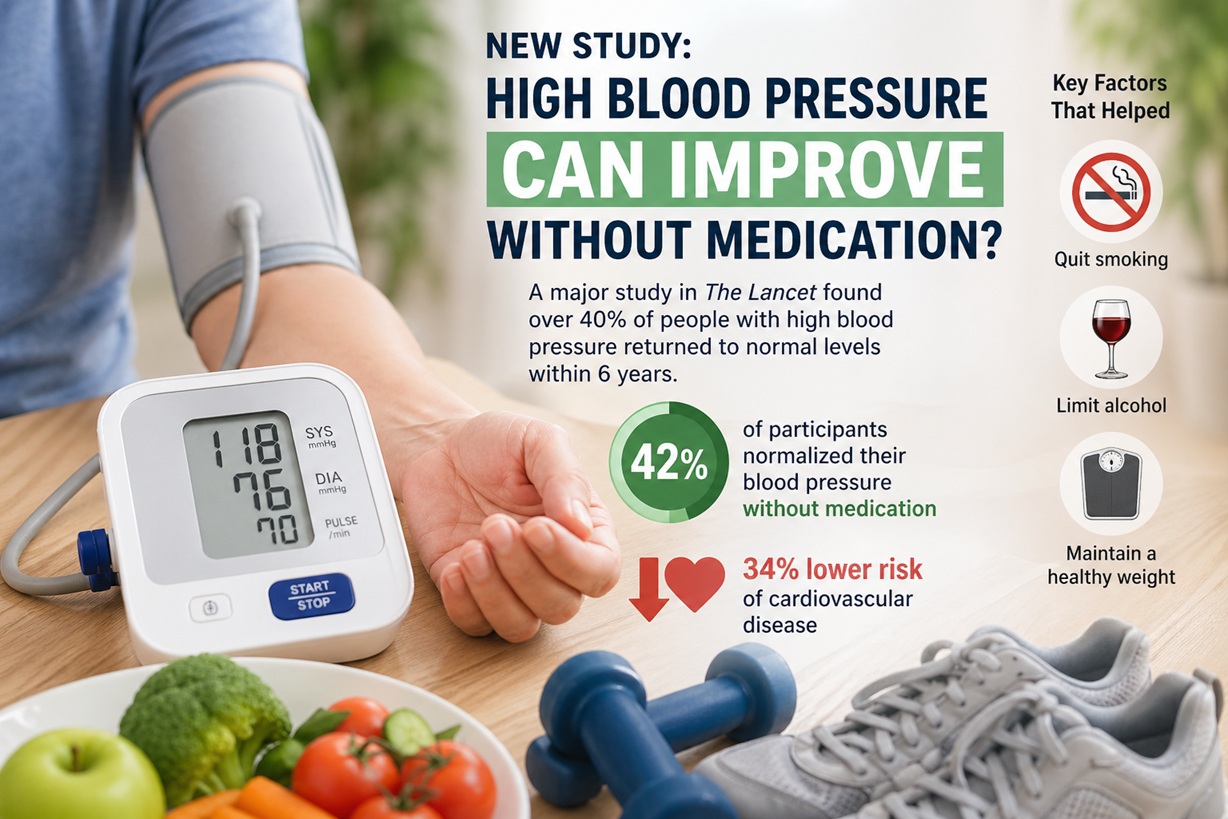
After six years of follow-up, researchers found that about 42% of participants experienced a return to normal blood pressure levels—without any pharmaceutical treatment. Even more striking, those individuals also showed a 34% lower risk of developing cardiovascular disease.
So what might explain this shift?
According to the researchers, lifestyle changes appear to play a major role. Factors such as quitting smoking, reducing alcohol intake, and maintaining a healthy body weight (as measured by BMI) were all associated with improved blood pressure levels.
Still, the researchers caution against jumping to conclusions. This was an observational study, meaning it can identify associations but cannot prove cause and effect. In other words, while some individuals saw improvements, it’s not yet clear exactly why—or whether those changes can be reliably reproduced in others.
Even so, the findings open the door to a more personalized approach to managing high blood pressure. For certain patients—particularly in the early stages of diagnosis—non-drug interventions like diet, exercise, and lifestyle adjustments may be a reasonable first step under medical supervision.
Experts agree that more rigorous research is needed before changing current treatment guidelines. But this study does offer a hopeful perspective: in some cases, high blood pressure may not be as permanent as once believed.
That said, no one should stop or avoid medication without consulting a healthcare provider. Hypertension remains a serious condition, and proper management is essential to reducing long-term health risks.