Himeji Castle – A UNESCO World Heritage Treasure in Japan
Himeji Castle – A UNESCO World Heritage Treasure in Japan
Recognized by UNESCO as a World Cultural Heritage Site in 1993, Himeji Castle stands as one of Japan’s oldest and most iconic historical landmarks. Revered by the Japanese as a national treasure, it is also considered one of the country’s “Three Great Castles,” celebrated not only for its timeless beauty but also for the rich history and enduring legends that surround it.
Located in central Japan, in Hyogo Prefecture near the ancient capital of Kyoto, the region has preserved many elements of traditional Japanese culture. Its proximity to Kyoto helped maintain architectural styles, customs, and cultural practices from a time when this area played a central role in shaping the nation.
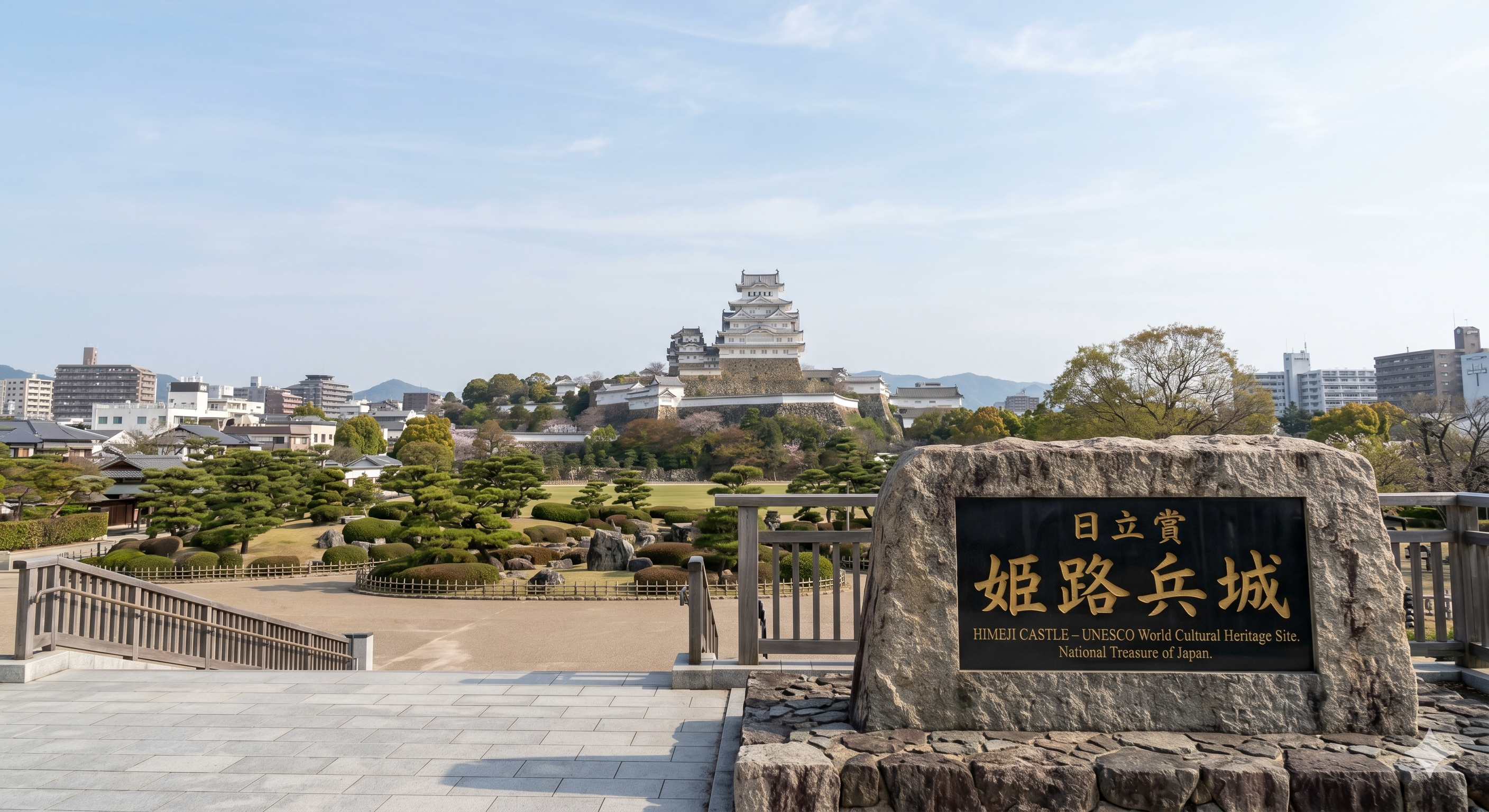
Often referred to as the “White Heron Castle,” Himeji earns its nickname from its brilliant white exterior. The walls are coated in white plaster—not just for aesthetic elegance, but also as a fire-resistant measure, since the castle is primarily constructed from wood rather than stone. Situated in the heart of Himeji, about 650 km west of Tokyo, the castle’s striking appearance has captivated visitors for centuries.
Historical records trace the origins of the site back to 1346. During a peaceful era under the rule of Ikeda Terumasa, the castle was extensively rebuilt around the year 1600. Although it suffered partial damage during World War II, it has since been carefully restored to preserve its original grandeur.
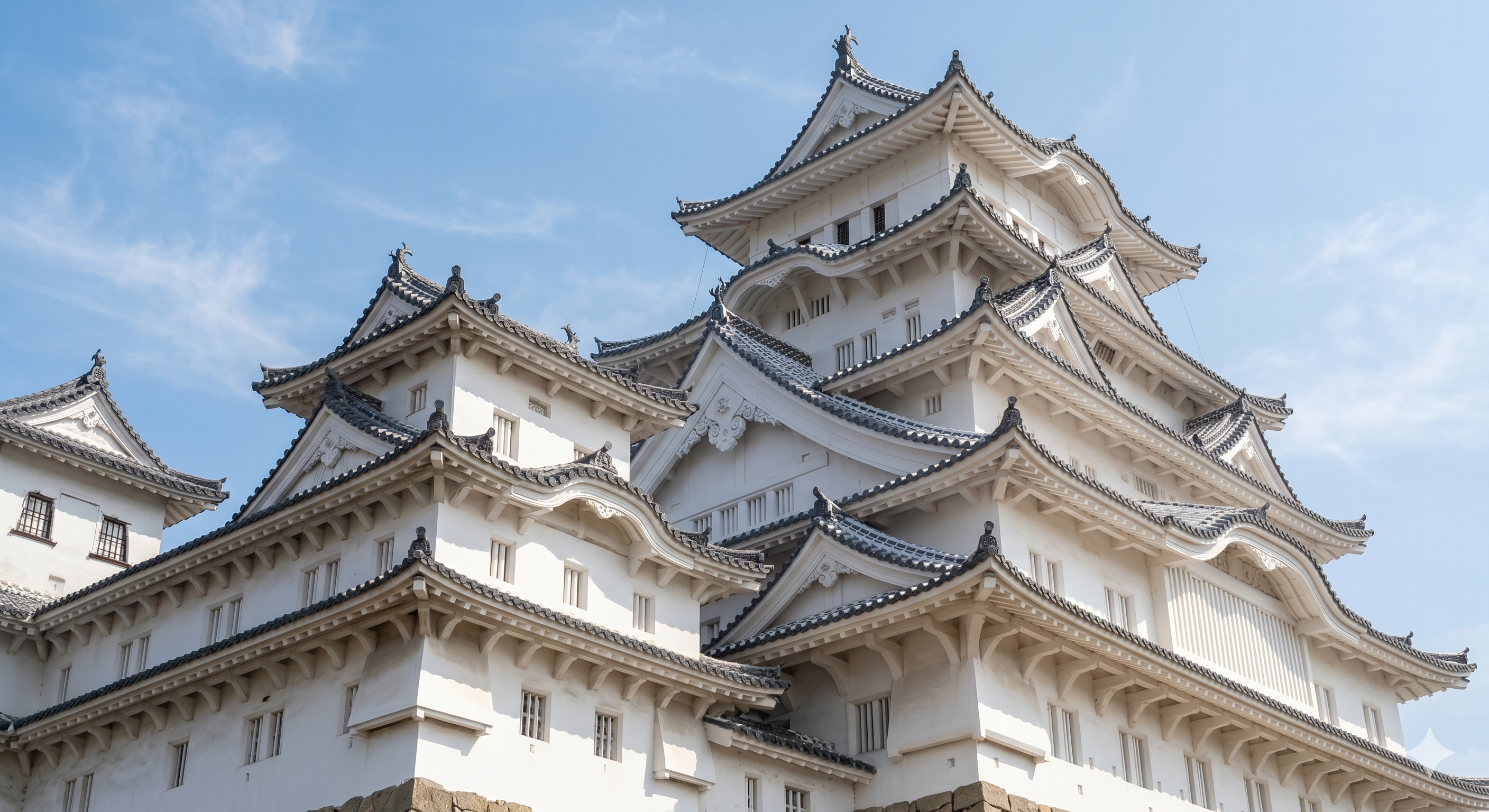
From a distance, the castle appears majestic and almost ethereal, resembling a white heron taking flight against the evening sky—a symbol of purity and nobility in Japanese culture. It is surrounded by lush greenery within Koko-en Garden, a traditional Japanese garden that enhances the serene atmosphere.
Architecturally, Himeji Castle is a masterpiece. Built atop Mount Himeyama, approximately 45.6 meters above sea level, it is renowned not only for its main keep but also for its intricate defensive system, designed like a labyrinth. Even today, despite clearly marked paths, visitors can easily lose their way without guidance.
The castle rises six stories high, supported by massive wooden pillars—some nearly 800 years old—crafted from rare, ancient trees. The entire structure, including beams, walls, and partitions, is made of wood, left in its natural finish without paint. The joinery techniques used to connect these elements are remarkably sophisticated, showcasing traditional Japanese craftsmanship. Staircases are deliberately offset between floors, creating defensive advantages and making navigation more difficult for potential intruders.
Inside, the castle consists of interconnected buildings linked by uneven passageways. Numerous small rooms line the corridors, designated for generals, soldiers, and women. Notably, near the eastern side of the main keep (Daitenshu), there is a small chamber reserved for samurai to perform Seppuku according to traditional rites.
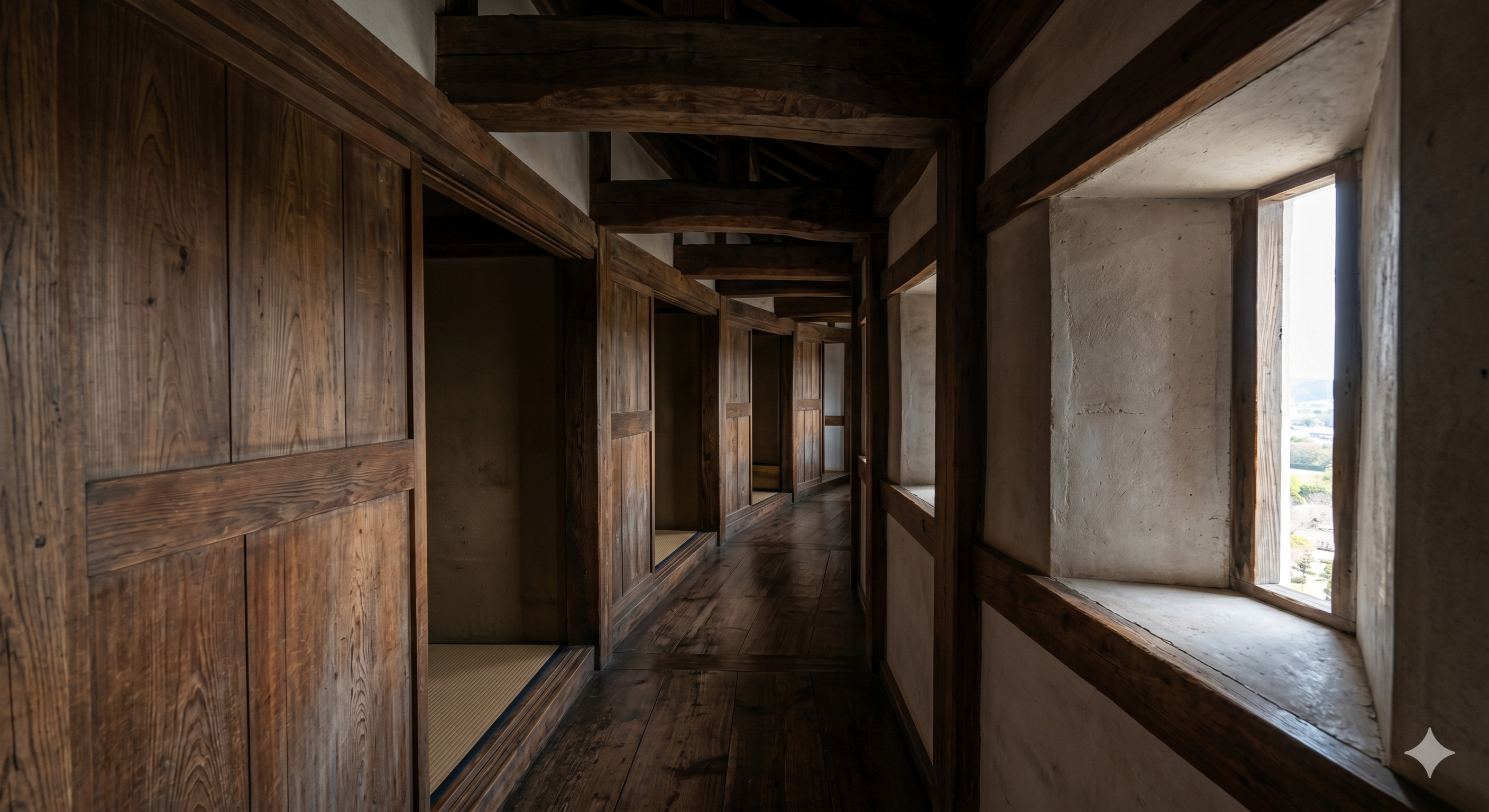
Long, winding wooden corridors—dating back to the early 17th century—add to the castle’s complexity. Windows are minimal and narrow, designed primarily for defense. Strategic openings allowed defenders to fire arrows, shoot firearms, or pour stones and even molten substances on attackers. The approach to the castle is intentionally challenging, with steep inclines and zigzagging paths that would have slowed enemy advances.
Beyond its structural ingenuity, the castle’s aesthetic appeal is equally remarkable. Its layered roofs are covered with blue-gray tiles adorned with delicately embossed floral patterns, crafted with precision before firing. These tiles were mass-produced with consistent size and design, reflecting the high level of technical skill achieved by Japanese artisans of the time.
Perhaps most striking is the harmony between the castle and its natural surroundings. Rising above a backdrop of greenery, stone walls, and seasonal blossoms, Himeji Castle presents a picture of balance and beauty. It’s no surprise that it remains one of Japan’s top tourist destinations, welcoming thousands of visitors each day who come to admire its history, architecture, and enduring cultural significance.