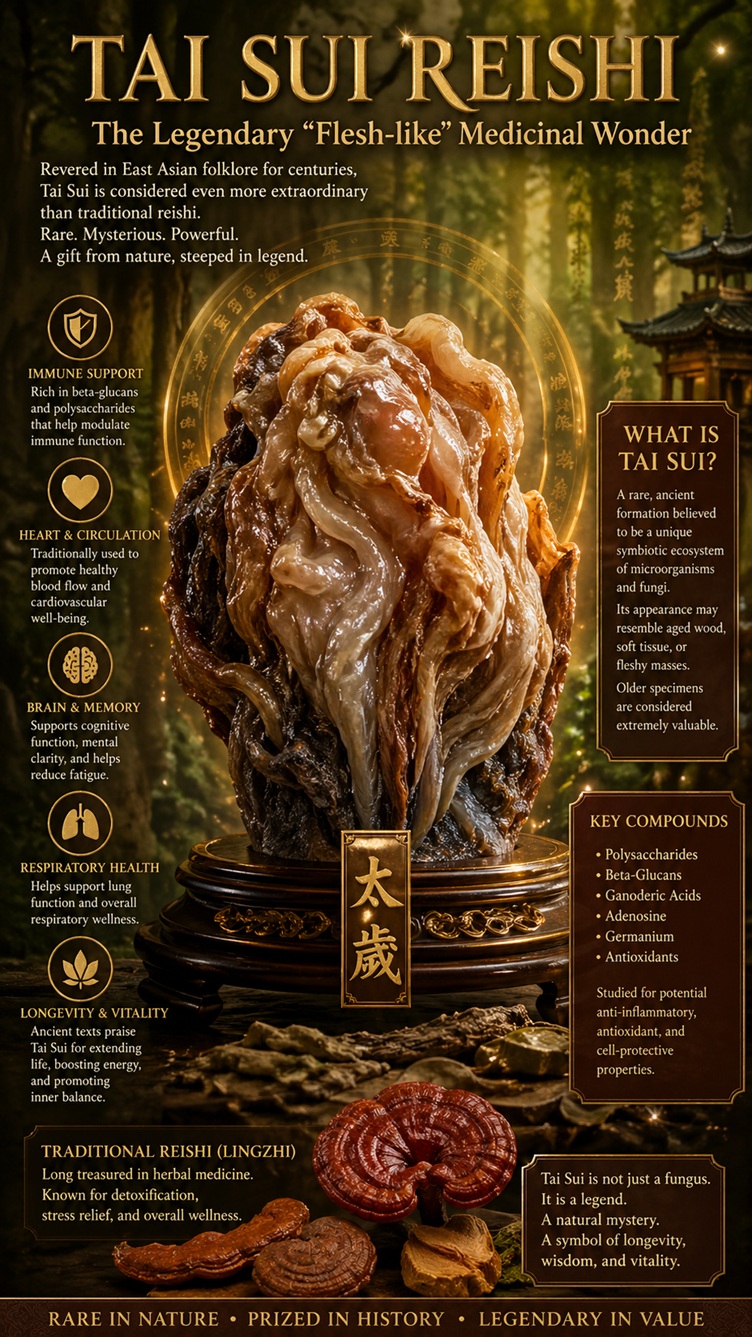
“Tai Sui Reishi” (often referred to in folklore as a rare “flesh-like” medicinal fungus) is considered even more extraordinary than traditional reishi in many East Asian legends, though modern scientific classification remains debated.
“Tai Sui Reishi” (often referred to in folklore as a rare “flesh-like” medicinal fungus) is considered even more extraordinary than traditional reishi in many East Asian legends, though modern scientific classification remains debated.
Ganoderma lucidum, commonly known as reishi or lingzhi, has been treasured for centuries in traditional herbal medicine. Ancient Chinese texts such as Shennong Ben Cao Jing ranked it among the highest-grade medicinal substances, often valued above ginseng. Historical medical references describe it as beneficial for detoxification, cardiovascular support, cognitive function, respiratory health, and longevity.
Modern research has identified a variety of bioactive compounds in reishi, including polysaccharides, beta-glucans, ganoderic acids, adenosine, and germanium. These compounds are studied for their potential roles in supporting immune health, reducing inflammation, improving oxygen utilization, and offering antioxidant properties. Some studies also suggest possible anti-aging and anticancer benefits, though ongoing scientific research is still evaluating many of these claims.
In traditional medicine, reishi is considered mildly warming and is often used to promote vitality, calm the mind, improve memory, and strengthen overall wellness.
“Tai Sui” is often described as an exceptionally rare biological formation that may resemble aged wood, soft tissue, or unusual fungal masses found in nature. Because of its uncommon appearance, it is frequently mistaken for tree roots or organic debris. Legends claim that older specimens are especially valuable, with coloration ranging from red and white to black or greenish tones. Lighter-colored varieties are often considered more prized in traditional markets.
Some reports describe Tai Sui as a unique polymeric symbiosis of microorganisms and fungi, though many commercial claims surrounding its medicinal powers—including hormone regulation, circulation enhancement, immune boosting, and cancer prevention—are not universally accepted by mainstream science.
Due to its rarity and mystique, Tai Sui has historically been regarded as an imperial tribute or luxury medicinal treasure. In some markets, extraordinary specimens are sold for extremely high prices, though such valuations are often driven more by folklore, rarity, and collector demand than by verified medical evidence.
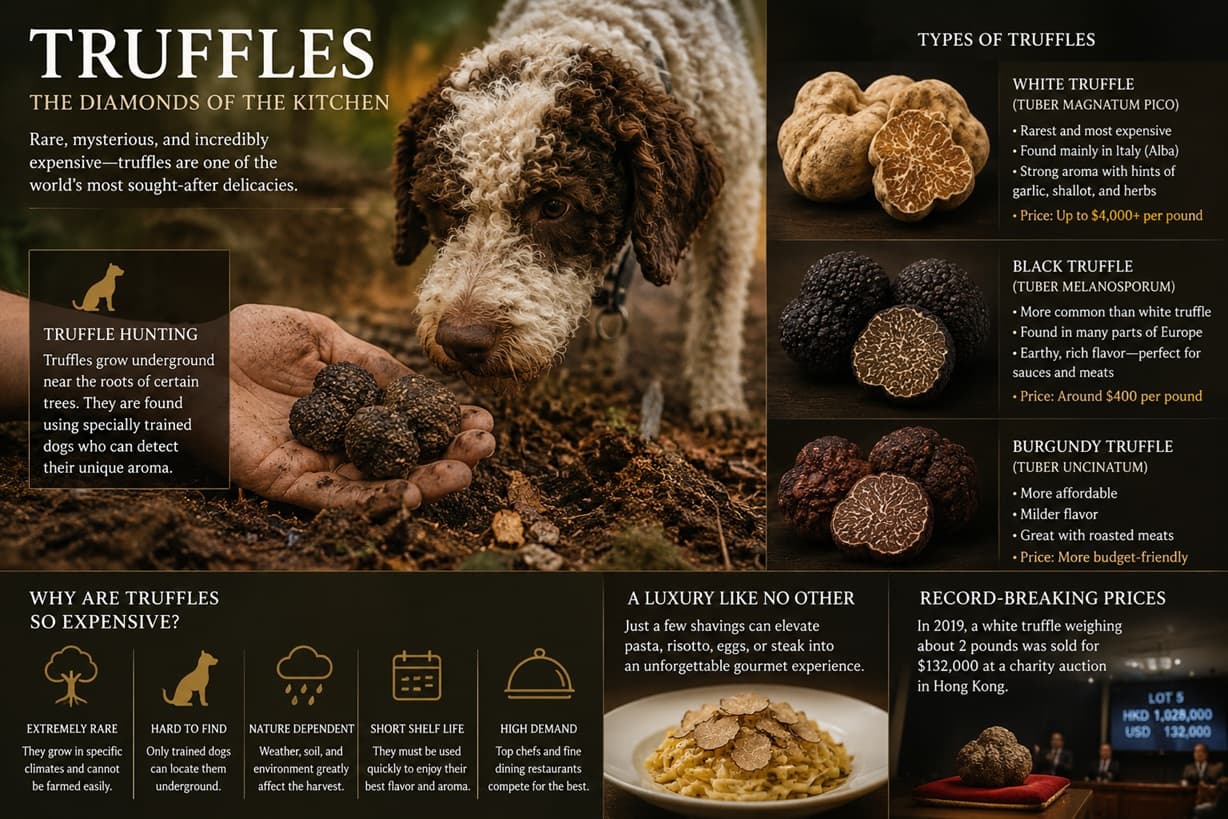
For American audiences, Tai Sui is best understood as a fascinating blend of traditional mythology, alternative medicine, and rare natural curiosity—similar to how rare truffles, ancient medicinal herbs, or exotic adaptogens are viewed in Western wellness culture.