Do You Truly Understand the Ancient Egyptian Pyramids? The 10 Greatest Secrets Waiting to Be Discovered!
Do You Truly Understand the Ancient Egyptian Pyramids? The 10 Greatest Secrets Waiting to Be Discovered!
Have you ever stood before the ancient Egyptian pyramids and felt your heart skip a beat? These colossal structures rise dramatically from the vast Giza desert under an endless blue sky, as if whispering stories from 4,500 years ago. Millions of people worldwide are captivated by their mysterious beauty, immense scale, and unsolved enigmas. How did the ancient Egyptians, using only primitive tools, construct such architectural masterpieces that still stand today? What were they built for? And what spiritual, scientific, and human stories lie hidden behind their gleaming white limestone casing?
In this in-depth feature, we will uncover the 10 most fascinating secrets of the ancient Egyptian pyramids — from their profound spiritual purpose and revolutionary construction techniques to the mind-blowing statistics that continue to astonish humanity. Finally, we’ll show you how to turn your dream of seeing them in person into reality through an unforgettable journey. Get ready — once you step into the world of the Pharaohs, you may never want to leave!
1. The Ancient Egyptian Pyramids: Not Just Tombs, But Gateways to Eternity
The pyramids were never mere “stone houses.” They represent the ultimate symbol of the ancient Egyptians’ belief in eternal life — a core concept in their civilization. The Egyptians viewed the Pharaoh as the son of Ra, the Sun God. Upon death, the Pharaoh’s soul (Ka) needed to reunite with the gods.
The pyramid’s shape was deliberately designed to mimic the rays of the sun descending to Earth. Its sloping sides symbolized the ramp by which the Pharaoh’s soul could ascend to heaven and join Ra. Inside, the Pyramid Texts — the oldest religious writings in the world — were carved on the walls. These ancient spells guided the soul through Duat (the underworld), helping it overcome trials and achieve immortality.
The interior contains complex burial chambers filled with treasures: gold, jewelry, everyday objects, and even solar boats (such as the 43-meter-long Khufu ship discovered near the Great Pyramid). Everything was prepared so the Pharaoh could continue his royal life in the afterlife. Labyrinthine passages, stone traps, and hidden chambers were ingeniously built to deter tomb robbers — though many pyramids were still plundered over the millennia.
Eternal life was not reserved only for the Pharaoh. The entire pyramid complex included smaller mastaba tombs for officials and family members, creating a gigantic “city of the dead” where everyone accompanied the king on his journey to immortality.
2. Construction Techniques: The Greatest Engineering Mystery in History
This remains one of humanity’s biggest questions for thousands of years: How did the ancient Egyptians build these monumental structures without modern machinery?
Scientists believe they used sophisticated ramp systems — straight ramps, spiral ramps, or internal ramps. Tens of thousands of workers pulled massive stones on sledges lubricated with water or Nile mud. Levers, ropes, and wooden rollers helped move blocks weighing tens of tons.
Contrary to the popular myth of slave labor, archaeological discoveries at the workers’ village in Giza reveal they were skilled, well-paid laborers. They received medical care, abundant food (bread, beer, beef), and were even buried with honor. An estimated 20,000 to 30,000 workers operated in shifts, mostly during the Nile flood season when farmers were free from field work.
The main building material was limestone quarried locally at Giza. The outer casing consisted of fine white Tura limestone, transported 15 km by boat along the Nile, making the pyramids shine brilliantly like giant diamonds under the sun. Red granite from Aswan (over 800 km away) was used for the burial chambers — some blocks weighing up to 80 tons.
The precision is astonishing: The base of the Great Pyramid of Khufu measures 230 meters per side with an error of just a few centimeters. The faces slope at an exact angle of 51°52' and are perfectly aligned with the four cardinal points.
3. Mind-Blowing Numbers That Will Leave You Speechless
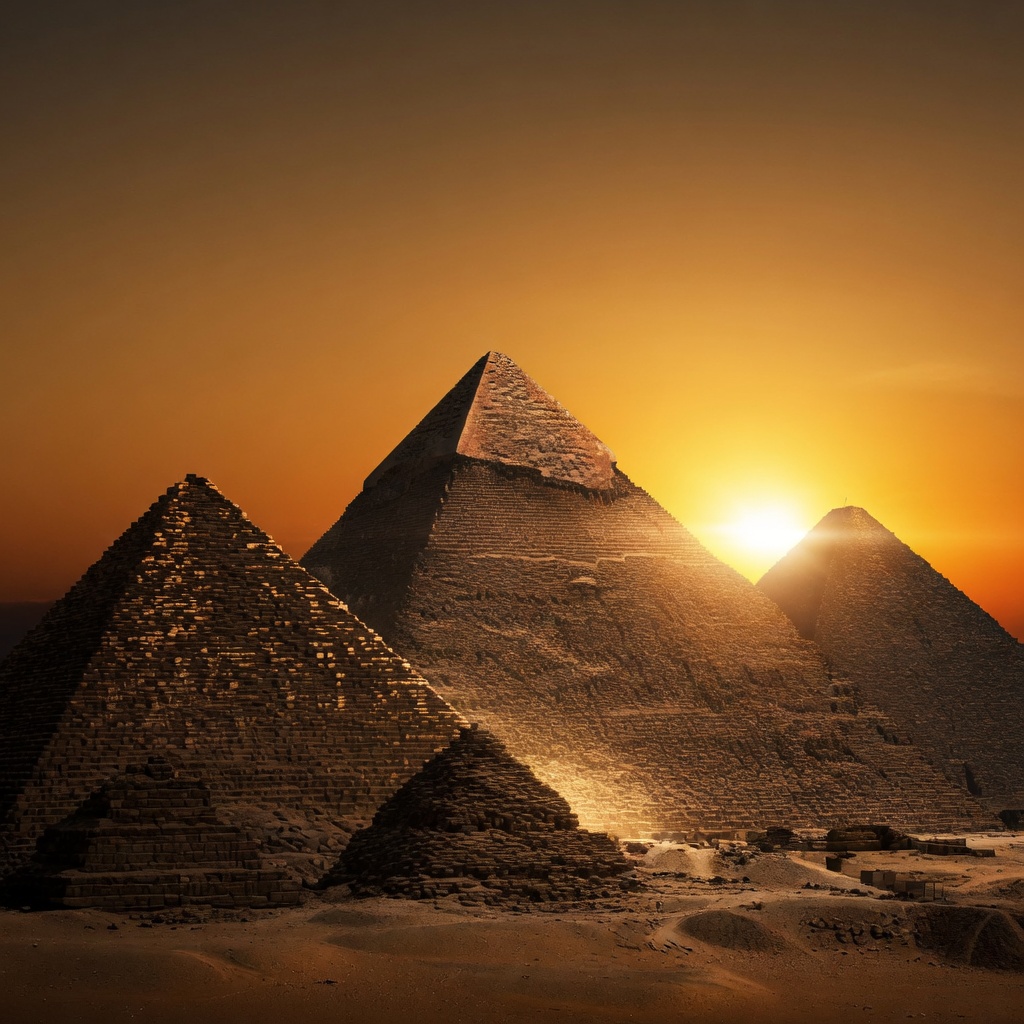
Great Pyramid of Khufu (Giza): Originally 146.6 meters tall (now 138.5 meters), weighing approximately 5.75 million tons, built from 2.3 million stone blocks averaging 2.5 tons each. Some granite blocks weigh 80 tons. It was the tallest man-made structure on Earth for nearly 4,000 years until Lincoln Cathedral surpassed it in the 14th century.
Construction Time: Around 20–26 years, with blocks reportedly placed at a rate of one every 2–3 minutes.
Astronomical Precision: Alignment to true north deviates by less than 0.05 degrees — more accurate than many modern buildings built without lasers. This was likely achieved through stellar observations or equinox measurements.
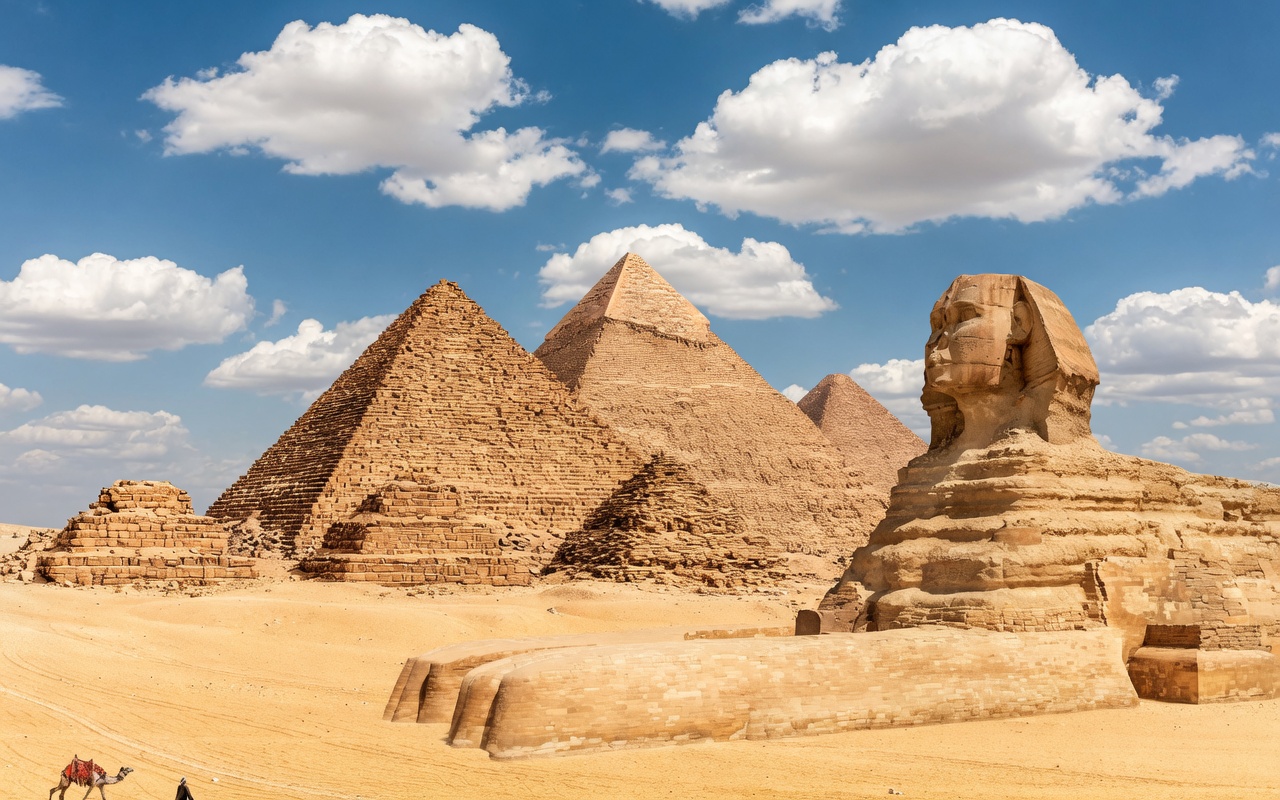
Giza Complex: Three main pyramids (Khufu, Khafre, Menkaure) guarded by the colossal Sphinx (73 meters long, 20 meters high), believed to be a portrait of Pharaoh Khafre.
These numbers represent far more than mathematics — they testify to the extraordinary social organization and planning of ancient Egyptian society.
4. The Secrets of the Sphinx and Other Pyramids
The Great Sphinx — known as “Father of Terror” — stands sentinel over the Giza Plateau. Its human head and lion body symbolize power and wisdom. Many theories suggest it was buried under sand for thousands of years before being uncovered in modern times.
Beyond Giza, Egypt contains over 100 pyramids. From the Step Pyramid of Djoser at Saqqara (the oldest) to the Red Pyramid and Bent Pyramid built by Sneferu (Khufu’s father), each dynasty left its architectural legacy and evolutionary mark.
5–10. More Captivating Secrets: Astronomy, Conspiracy Theories, and Hidden Mysteries
5. Connection to the Stars
Some researchers claim the three Giza pyramids are aligned exactly like Orion’s Belt — the constellation associated with Osiris, the god of resurrection and rebirth.
6. Lost Ancient Technology
How were 80-ton blocks moved? Theories include internal levers, temporary canals, or even “ancient concrete” techniques.
7. Mysteries Inside the Pyramids
The King’s Chamber, Queen’s Chamber, and Grand Gallery feature incredibly precise corbelled arches. Acoustic properties and resonance inside are still being studied by modern scientists.
8. Looting and Protection
Most treasures were stolen during the Old Kingdom. In 820 AD, Caliph Al-Ma’mun became the first to forcibly enter the Great Pyramid in modern recorded history.
9. Global Cultural Influence
Pyramids have inspired architecture worldwide — from ancient Rome to modern buildings in the United States and beyond.
10. Lessons for Humanity
The pyramids remind us of the power of faith, organization, and collective intelligence — values that remain profoundly relevant today.
Turning Dreams into Reality: The Ultimate Egypt Tour (9 Days 8 Nights)
After reading about these wonders, wouldn’t you love to touch history with your own hands? Our professionally designed 9-Day 8-Night Egypt Tour makes it possible.
Days 1–3 in Cairo: Explore the Great Pyramids of Giza, the Sphinx, and the Egyptian Museum with Tutankhamun’s treasures.
Days 4–8: Fly to Luxor and Aswan. Cruise the legendary Nile River, visit the magnificent temples of Karnak and Luxor, the Valley of the Kings, and the majestic Abu Simbel.
Everything is taken care of — expert guides, 5-star hotels, meals, and safe transportation — so you can fully immerse yourself in the magic of ancient Egypt.
Conclusion: The Pyramids — An Eternal Symbol of Humanity
The ancient Egyptian pyramids are not just stone. They are the soul of a great civilization — a testament to humanity’s eternal desire for immortality and our incredible capacity for creation. Though science has decoded many of their secrets, their mystical allure remains undiminished.
They teach us that when people unite with strong belief and determination, they can achieve extraordinary heights.
Are you ready for your own adventure? Let the pyramids transform how you see history — and yourself.
What do you think?
Were the pyramids built by pure human genius or is there something more? Share your thoughts in the comments and forward this article if it sparked your curiosity! 🏛️✨