The Origins and Meaning of International Children’s Day (June 1)
The Origins and Meaning of International Children’s Day (June 1)
International Children’s Day, celebrated on June 1, is widely recognized in many countries as a special occasion dedicated to children. It is a day for families to honor childhood, express love, and create joyful memories through gifts, celebrations, and activities focused on young people’s happiness and well-being.
A Brief History of International Children’s Day
The origins of International Children’s Day are rooted in tragic events during World War II.
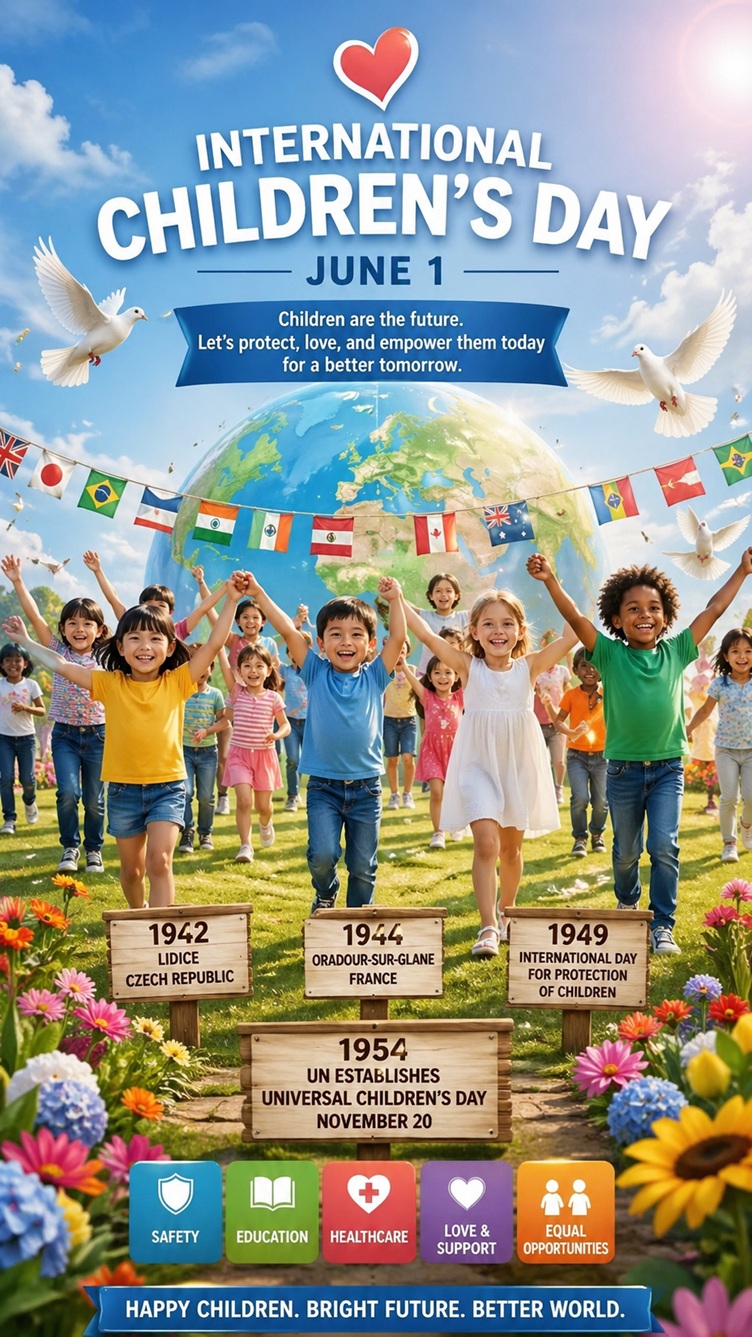
On June 1, 1942, Nazi forces attacked the village of Lidice in what is now the Czech Republic. Hundreds of men, women, and children were brutally persecuted, and many children were sent to concentration camps, where countless innocent lives were lost.
Two years later, on June 10, 1944, another horrific massacre occurred in Oradour-sur-Glane, France, where many women and children were killed when Nazi troops destroyed the village.
To honor the memory of these innocent children and to advocate for children’s rights worldwide, the Women’s International Democratic Federation declared June 1 as International Day for Protection of Children in 1949. Beginning in 1950, many countries started observing June 1 as International Children’s Day.
International Children’s Day Around the World
Although June 1 remains an important date in many nations, children are celebrated on different days depending on local traditions and national history.
In 1954, the United Nations established Universal Children’s Day and recommended November 20 as a global day to promote children’s welfare, rights, and international unity. November 20 also marks key milestones in child advocacy, including:
The Declaration of the Rights of the Child (1959)
The Convention on the Rights of the Child (1989)
Today, countries choose their own dates to celebrate children:
Japan: May 5 (Children’s Day / Kodomo no Hi)
Brazil: October 12
India: November 14
Turkey: April 23
Canada: November 20
Australia: Fourth Wednesday in October
International Children’s Day in Vietnam
Vietnam was one of the earliest countries to strongly support children’s rights and became the first nation in Asia and the second in the world to ratify the UN Convention on the Rights of the Child.
Since the country’s early independence period, June 1 and the Mid-Autumn Festival have been celebrated as major events for children. Even during times of war, President Ho Chi Minh emphasized the importance of children’s welfare, education, and happiness.
His letters to children on these occasions became an enduring symbol of Vietnam’s commitment to future generations.
Why International Children’s Day Matters
International Children’s Day is more than a holiday—it serves as a reminder that children deserve:
Safety
Education
Healthcare
Love and emotional support
Equal opportunities
For parents, it is also an opportunity to celebrate childhood and strengthen family bonds. Across cultures, the day encourages societies to invest in children’s futures and protect their rights.
Modern Celebrations
Today, International Children’s Day is often marked by:
Family gatherings
School events
Community festivals
Charity programs
Gifts and recreational activities
For many children, it becomes one of the happiest memories of their early years.
Final Thoughts
No matter where or when it is celebrated, International Children’s Day reflects a universal belief: children are the future, and their well-being should always be a global priority.
By honoring children, societies affirm the importance of nurturing the next generation with compassion, protection, and opportunity.