Insomnia does more than leave you feeling tired—it can affect memory, reduce focus, increase stress, and even speed up the aging process. For middle-aged adults, quality sleep becomes even more essential for maintaining heart health, mental clarity, and daily energy.
Insomnia does more than leave you feeling tired—it can affect memory, reduce focus, increase stress, and even speed up the aging process. For middle-aged adults, quality sleep becomes even more essential for maintaining heart health, mental clarity, and daily energy.
The good news is that adding the right evening exercises to your routine can naturally improve sleep quality and help you wake up feeling more refreshed.
1. What exercises should you do at night to sleep better?
Regular physical activity supports overall health and can improve sleep. However, not all workouts are ideal before bedtime.
High-intensity exercise can increase endorphins and adrenaline, raising your heart rate and making it harder for your body to relax.
Best evening exercises:
Deep breathing exercises
Gentle yoga
Light stretching
Relaxing walks after dinner
Meditation with controlled breathing
Workouts to avoid late at night:
Intense running
Jump rope
Fast cycling
Heavy weightlifting
HIIT or vigorous cardio
Important tip:
Finish exercising at least 1–2 hours before bed so your body has time to wind down.
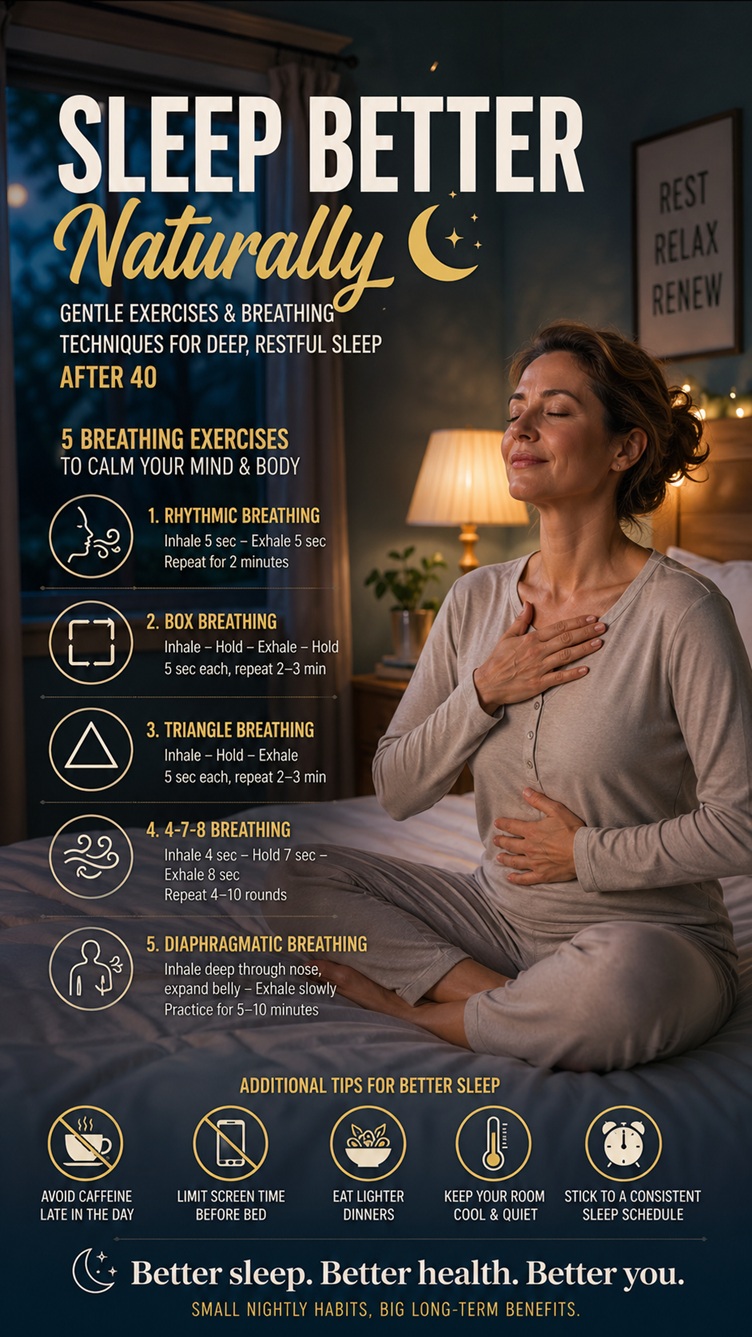
2. Simple breathing exercises that promote better sleep
Breathing exercises are one of the easiest and most effective ways to calm the nervous system, lower stress, and prepare for restful sleep.
2.1. Rhythmic breathing for stress relief
This technique helps slow your heart rate and relax your body.
How to do it:
Inhale slowly for 5 seconds
Exhale slowly for 5 seconds
Repeat for about 2 minutes
2.2. Box breathing
A powerful method for calming racing thoughts and improving focus.
How to do it:
Inhale for 5 seconds
Hold for 5 seconds
Exhale for 5 seconds
Hold with empty lungs for 5 seconds
Repeat for 2–3 minutes
2.3. Triangle breathing for relaxation
This exercise can reduce fatigue and tension while restoring calm.
How to do it:
Inhale for 5 seconds
Hold for 5 seconds
Exhale for 5 seconds
Repeat for 2–3 minutes
As you breathe, picture yourself inhaling calmness and exhaling stress.
2.4. The 4-7-8 breathing method
A widely recommended technique for relaxing the nervous system before sleep.
How to do it:
Inhale through your nose for 4 seconds
Hold for 7 seconds
Exhale through your mouth for 8 seconds
Recommended repetitions:
Beginners: 4 rounds
With practice: 8–10 rounds
2.5. Diaphragmatic breathing
This method encourages deep relaxation and can also aid digestion.
How to do it:
Lie comfortably on your back
Place one hand on your chest and one on your abdomen
Inhale deeply through your nose, expanding your belly
Exhale slowly while tightening your abdominal muscles
Practice for 5–10 minutes.
3. Additional sleep tips for middle-aged adults
To further improve sleep quality:
Avoid caffeine later in the day
Limit screen time before bed
Eat lighter dinners
Keep your bedroom cool, dark, and quiet
Stick to a consistent sleep schedule
Final thoughts
For many Americans balancing careers, family, and daily responsibilities, quality sleep often becomes harder to maintain with age. Incorporating gentle evening exercises and breathing techniques can be a practical, natural way to support deeper, more restorative sleep.
Better sleep is one of the most powerful tools for maintaining long-term health, energy, and emotional well-being. Sometimes, small nightly habits can make the biggest difference.