The History and Meaning of Earth Day
The History and Meaning of Earth Day
Earth Day, celebrated annually on April 22, has become one of the world’s most recognized environmental observances. For more than five decades, it has served as a powerful reminder of humanity’s shared responsibility to protect the planet and preserve its natural resources for future generations.
Origins and Significance of Earth Day
The concept of Earth Day first emerged in 1970 through the efforts of two influential environmental advocates.
John McConnell, a peace activist and environmentalist, originally proposed a day to honor the Earth on March 21, 1970, the first day of spring in the Northern Hemisphere. This date symbolized renewal, balance, and new life. San Francisco officially recognized the occasion, and later, United Nations Secretary-General U Thant supported the idea as an international observance.
However, the modern Earth Day most people recognize today was established by Senator Gaylord Nelson of Wisconsin. Concerned about growing environmental destruction, Nelson organized a nationwide environmental teach-in on April 22, 1970. His movement mobilized approximately 20 million Americans, making it one of the largest civic events in U.S. history at the time.
This historic demonstration raised public awareness about pollution, deforestation, toxic waste, and the urgent need for environmental reform. It also helped inspire major U.S. legislation, including:
The Clean Air Act
The Clean Water Act
The Safe Drinking Water Act
The establishment of the Environmental Protection Agency (EPA)
Former President Bill Clinton later recognized Nelson’s contributions, awarding him the Presidential Medal of Freedom in 1995 for his environmental leadership.
Why Earth Day Matters
Earth Day is more than a symbolic celebration—it is a global call to action.
Each year, people around the world participate in activities such as:
Planting trees
Cleaning up neighborhoods, parks, and waterways
Promoting recycling and sustainable living
Educating communities about environmental challenges
Advocating for climate action and policy reform
The day encourages individuals, communities, businesses, and governments to reflect on how everyday choices impact the environment.
Earth Day 2024 Theme: Planet vs. Plastics
The theme for Earth Day 2024 was “Planet vs. Plastics.”
This campaign called on nations worldwide to reduce plastic production by 60% by 2040, highlighting the severe environmental and health consequences of plastic pollution.
Global Plastic Crisis:
The world produces approximately 400 million tons of plastic annually
Around 79% ends up in landfills or the environment
Only 9% is recycled
By 2050, plastic waste could reach 12 billion tons globally if no major action is taken
Plastic pollution threatens:
Human health
Marine ecosystems
Wildlife
Biodiversity
Climate stability
Earth Day in Vietnam and Around the World
Vietnam, like many nations, has seen rapid growth in plastic consumption, increasing environmental pressures. Governments worldwide are introducing policies to reduce plastic waste, promote sustainable alternatives, and strengthen international cooperation.
Earth Day continues to unite countries across borders in addressing shared environmental concerns.
Past Earth Day Themes
Recent Earth Day themes have included:
2015: It’s Our Turn to Lead
2016: Trees for the Earth
2017: Environmental and Climate Literacy
2018: End Plastic Pollution
2019: Protect Our Species
2020: Climate Action
2021: Restore Our Earth
2022: Invest In Our Planet
2024: Planet vs. Plastics
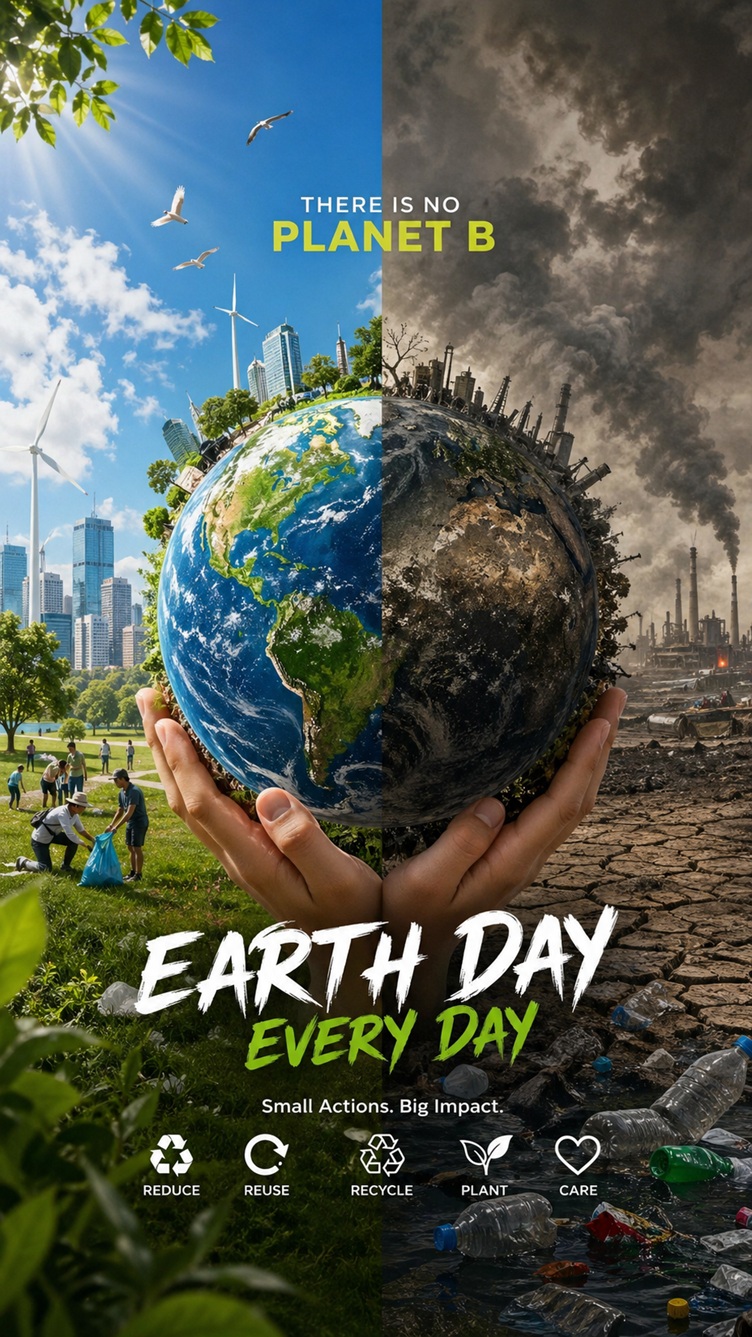
How Individuals Can Support Earth Day Every Day
Protecting the Earth requires consistent action beyond just one day a year. Meaningful steps include:
Reducing single-use plastics
Recycling responsibly
Conserving water and electricity
Using public transportation, biking, or walking
Supporting sustainable products
Eating locally grown foods
Planting trees and gardens
Reducing paper waste through digital alternatives
Reusing and repurposing materials
Participating in local environmental initiatives
Final Thought
Earth Day reminds us that protecting the environment is not just an option—it is essential for our survival and the well-being of future generations.
Every small action matters. By making sustainable choices and encouraging collective responsibility, we can help ensure a healthier, cleaner, and more resilient planet.
Protecting the Earth means protecting ourselves.